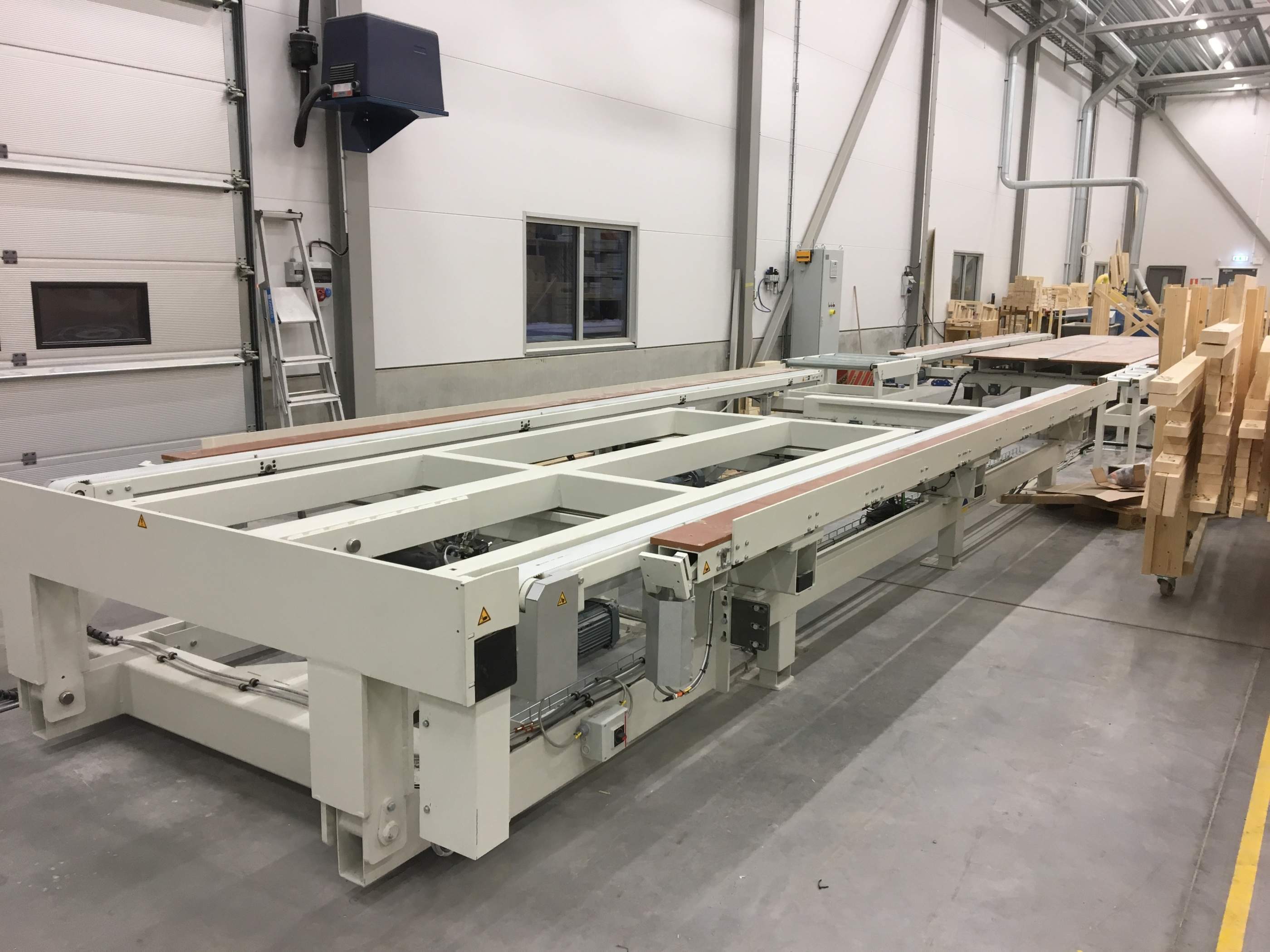
Squaring Tables

Our squaring tables enhance workflow efficiency by providing a stable, ergonomic surface for operations and precision handling. All tables have powered width adjustment that doubles as a clamping function to align frameworks, ensuring 90-degree corners.

More than a table

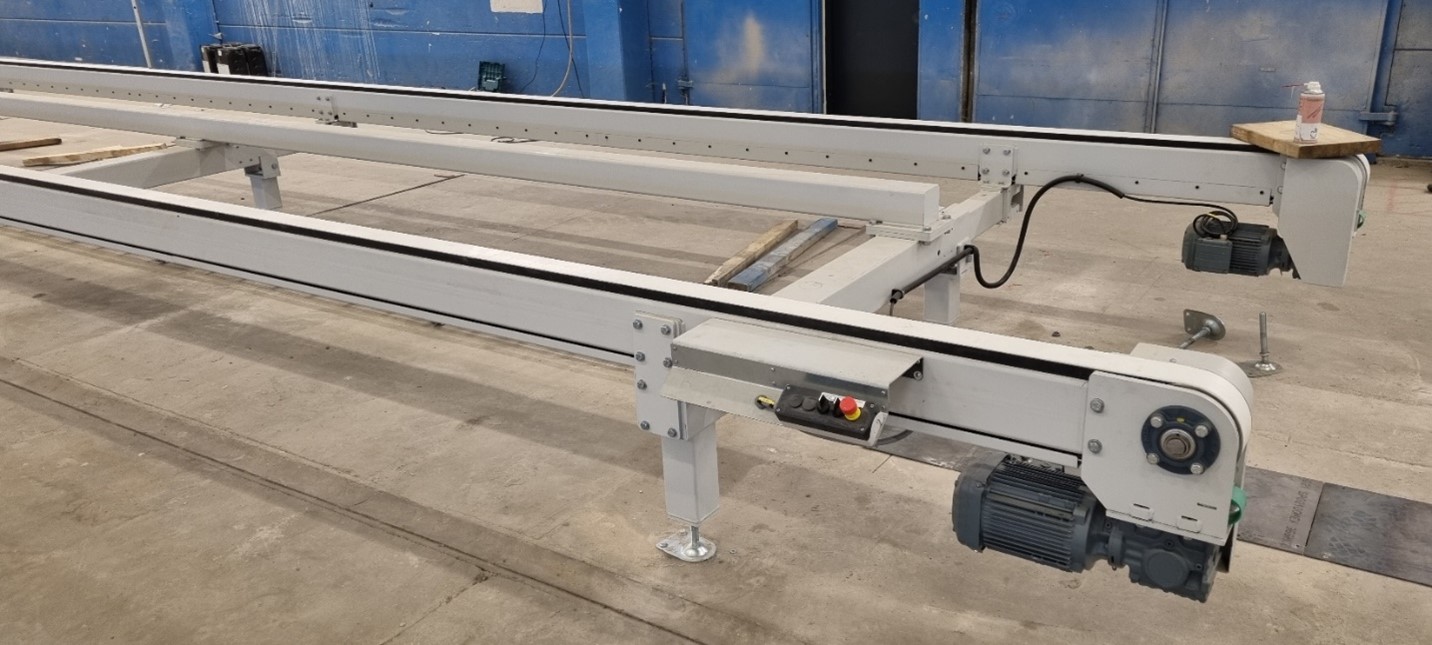
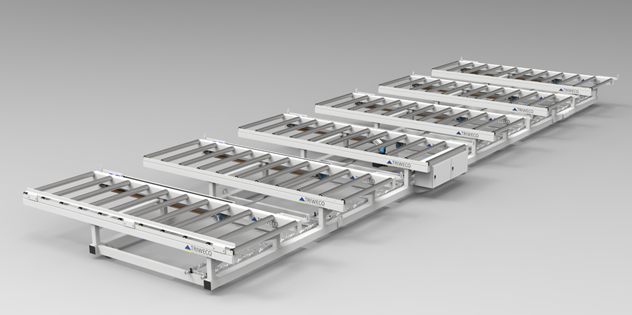
Our squaring tables are not just tables. They have sophisticated functionality for receiving elements from the previous station, can be equipped with different types of manual or powered conveyors (rollers, belts, or chains), and ensure alignment of the framework. Available in both open or closed configurations, and either longitudinal or latitudinal transport, the tables are customizable to suit your factory layout and operational needs.
CONTACT US

Squaring Table - Open/Closed

The squaring tables are available in two different formats: open or closed. Open tables are convenient as they allow operators to work inside the table and gain clear access to elements. Closed tables are for elements that need a support underneath to avoid material falling through. All tables have powered width adjustment that doubles as a clamping function to align frameworks, ensuring 90-degree corners.

Squaring Table - Sideways Transport

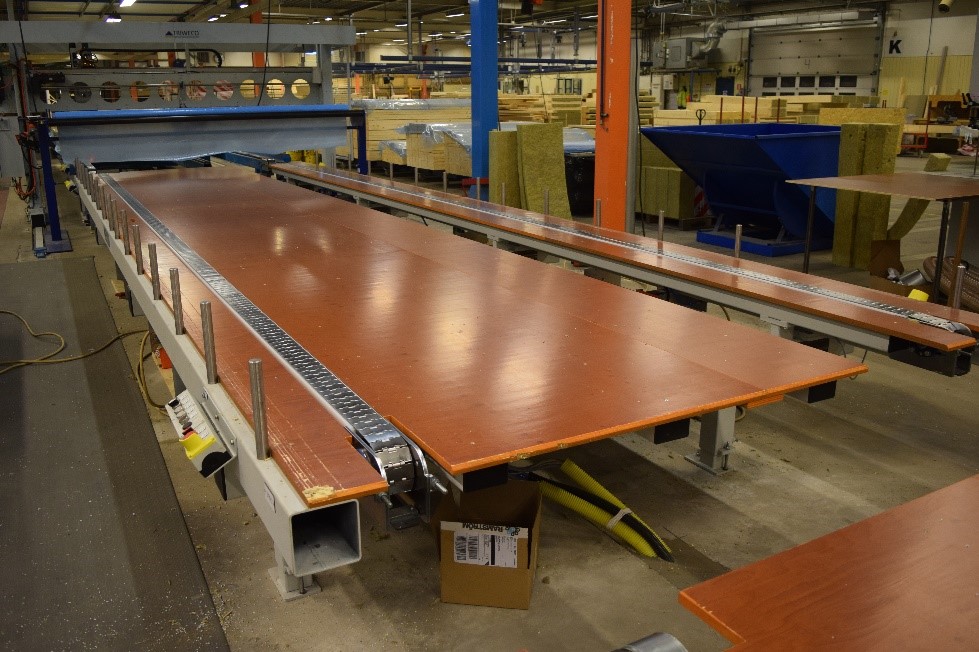
Developed to meet the demands of production facilities where panels need to be transported sideways, the sideways transport squaring table provides flexibility without compromising functionality. The table consists of electrically driven chain conveyors, pneumatic stops on the long side to place the element at the correct position, and a clamping unit to clamp the element against the stops. The station can be movable on floor rails to pick up elements from stations within the production line.

Vertical Wall Elements

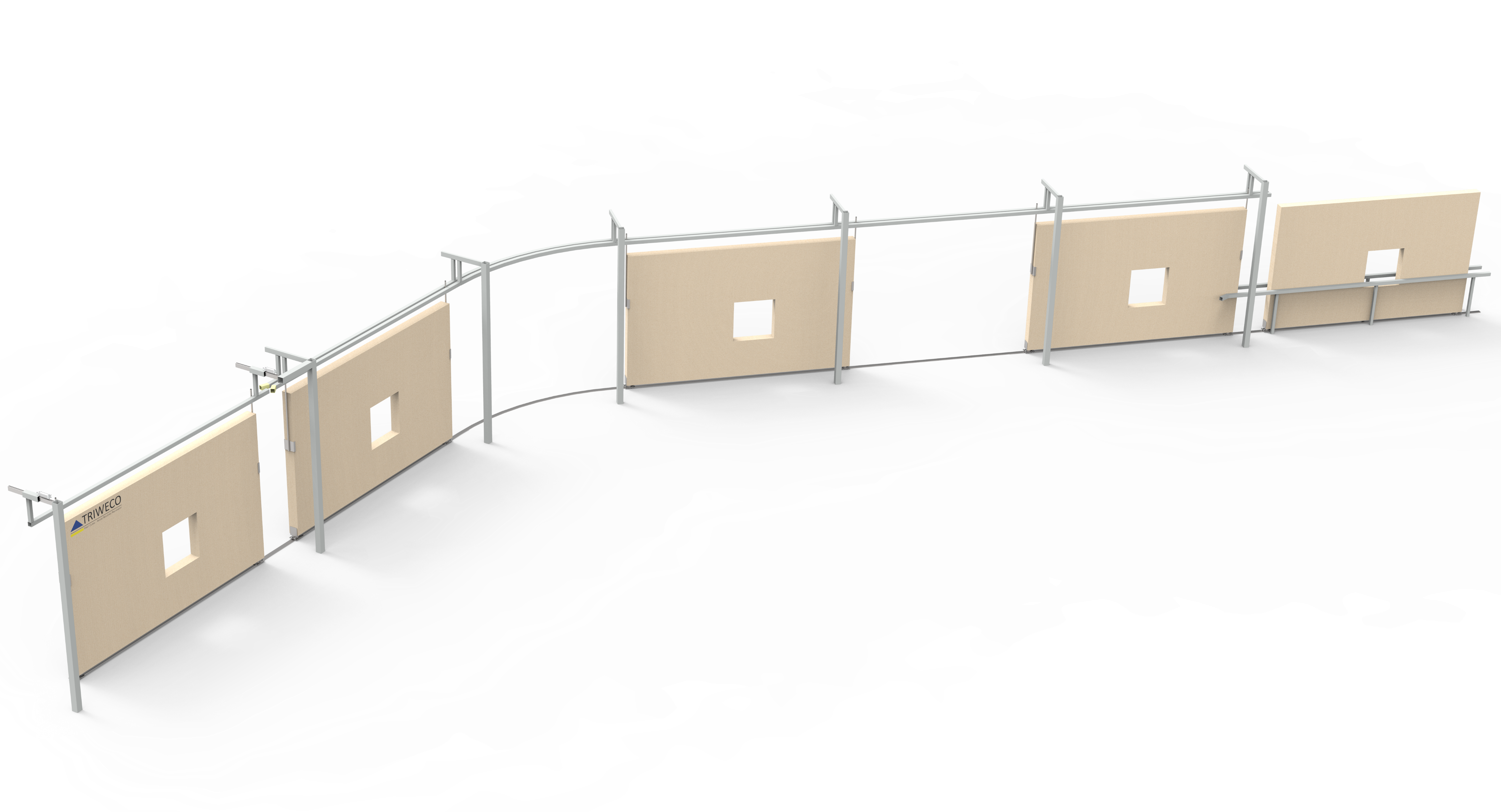
This station provides support for working on and storing vertical wall elements. Paired with an upriser or overhead crane to place the panel in a standing position. The solution to transport each wall can be rail carts or roller conveyors on rails placed on the floor. Parallel steering posts are placed alongside the panels and above the highest wall height to support the movement along the line.  Transport of panels is done manually. Various tasks can be performed since the entire sides of the wall are "free" to work on.